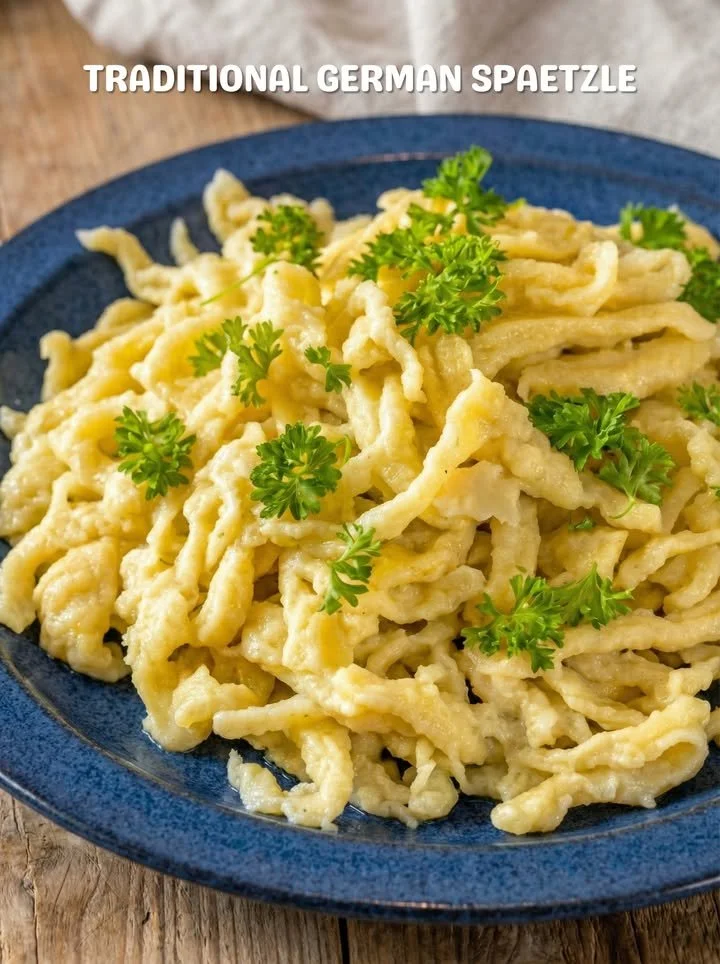
Traditional German noodles, known as Spaetzle, are a delightful and rustic dish originating from the heart of Germany. With their unique texture, these small, soft noodles are incredibly versatile and can complement a wide array of entrees, or be enjoyed on their own. The delightful blend of flavors from nutmeg and butter brings depth to these noodles, making them a comforting side dish that transports you straight to a cozy German kitchen. The preparation is straightforward, using staple ingredients you likely already have at home. Perfect for family dinners or as a side for your favorite meat dishes, these traditional noodles will impress both your family and friends with their simplicity and deliciousness.
Why You’ll Love This Recipe
- Quick and easy to prepare, ready in under 30 minutes.
- Soft and chewy texture that pairs well with various sauces and meats.
- Perfect for soaking up gravies, making your meals more satisfying.
- Customizable with spices and herbs according to your taste.
- A beloved family recipe that brings warmth and joy to the table.
Ingredients
- 2 cups (240 g) all-purpose flour
- 1/2 teaspoon (2 g) salt
- 1/4 teaspoon (1 g) nutmeg
- 3 large eggs
- 1/2 cup (120 ml) milk
- 2 tablespoons (30 g) butter
Ingredient Notes
- Flour: All-purpose flour is ideal for this recipe, but you can also use a mix of whole wheat for added fiber.
- Eggs: The eggs help bind the dough together; for a vegan alternative, consider using flax eggs or a similar substitute.
- Milk: Whole milk provides creaminess, but you may use almond milk or any non-dairy milk for a lactose-free version.
Kitchen Tools Needed
- Mixing bowls
- Whisk
- Spaetzle maker or colander
- Large pot
- Slotted spoon
- Skillet
Step-by-Step Instructions
- In a large mixing bowl, whisk together the flour, salt, and nutmeg until well combined.
- In a separate bowl, beat the eggs and then whisk in the milk until fully blended.
- Gradually incorporate the egg mixture into the flour mixture, stirring continuously until the batter is smooth and has a thick, sticky consistency.
- Bring a large pot of salted water to a rolling boil over medium-high heat.
- Using a spaetzle maker or a colander with large holes, press the batter through into the boiling water.
- Allow the spaetzle to cook until they float to the top of the water, which should take about 2-3 minutes.
- Use a slotted spoon to remove the cooked noodles and transfer them to a plate.
- In a skillet, melt the butter over medium heat, then add the spaetzle, tossing gently to coat. Serve warm.
Cooking Tips
- For an extra flavor boost, sauté garlic or onions in the butter before tossing in the noodles.
- Make sure your water is boiling vigorously; this helps the noodles cook evenly.
- You can add some herbs like parsley or chives to the batter for added flavor.
- Don’t overmix the batter; mixing too much can lead to tough noodles.
- If using a colander, work in batches to avoid overflow.
Variations
- Cheese Spaetzle: Fold in shredded cheese (like cheddar or Gruyère) into the noodles before serving for a comforting cheesy dish.
- Herb Infused: Mix fresh herbs such as parsley or chives into the batter for a fresh taste.
- Spicy Twist: Add a pinch of cayenne pepper or paprika to the dough for a kick.
- Vegetable Spaetzle: Incorporate pureed spinach, beet, or carrot into the batter for a colorful twist.
Serving Suggestions
Serve the spaetzle warm, drizzled with melted butter and sprinkled with fresh herbs. They can accompany hearty dishes like beef stew, roast chicken, or sauerbraten. For a vegetarian option, pair with sautéed mushrooms and onions.
Storage Instructions
Store any leftover spaetzle in an airtight container in the refrigerator for up to 3 days.
Reheating Tips
Reheat on the stovetop in a skillet over medium-low heat, adding a little butter or water to keep them moist, or microwave in short increments until warmed through.
Nutrition Estimate (per serving)
- Calories: 210
- Protein: 9 g
- Carbohydrates: 28 g
- Fat: 8 g
Recipe Summary Card
- Prep Time: 10 minutes
- Cook Time: 10 minutes
- Total Time: 20 minutes
- Servings: 4
- Cuisine: German
- Course: Side Dish
- Calories: 210
Frequently Asked Questions
Q: Can I freeze spaetzle?
A: Yes, you can freeze uncooked or cooked spaetzle. Just ensure they are well-sealed in an airtight container.
Q: What can I use if I don’t have a spaetzle maker?
A: A colander with large holes or a large slotted spoon can be used to drop the batter into the boiling water instead.
Q: How do I make this recipe gluten-free?
A: Substitute all-purpose flour with a gluten-free flour blend designed for baking.
Q: How can I make spaetzle vegan?
A: Replace the eggs with flaxseed or chia seeds and the milk with a plant-based alternative.
Q: Can I use whole wheat flour instead of all-purpose flour?
A: Yes, whole wheat flour can be used, but it may result in a denser noodle.
Conclusion
Now that you have the secrets to making traditional German noodles, it’s time to bring the rich flavors of this dish to your own kitchen. These spaetzle are a wonderful addition to any meal and one that everyone will enjoy. Whether served with a hearty stew or simply topped with butter and herbs, they are sure to become a cherished recipe in your collection. Happy cooking!